 Thursday, October 1, 2026 · Serving all of Hudson County since March 2011
Sen. Shaheen Challenges DFC Chief Over $20B Hormuz Maritime Insurance Plan, Warns of China Windfall
WASHINGTON — U.S. Sen. Jeanne Shaheen, D-N.H., ranking member of the Senate Foreign Relations Committee, sent a letter Monday to U.S. International Development Finance Corporation (DFC) CEO Benjamin Black demanding…
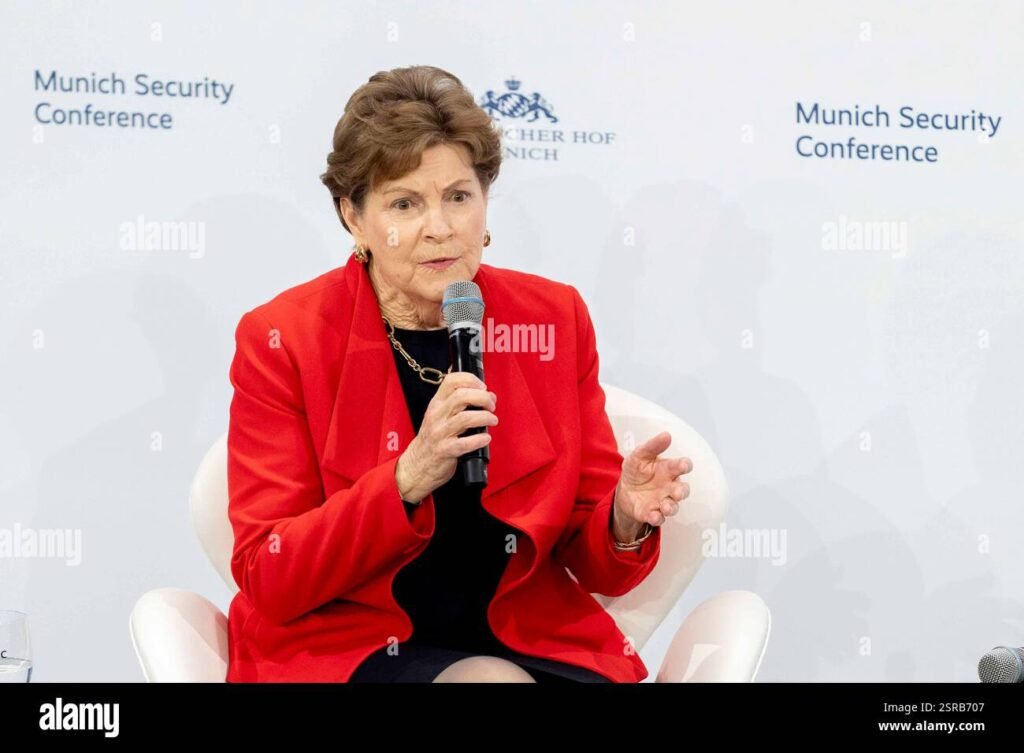
WASHINGTON — U.S. Sen. Jeanne Shaheen, D-N.H., ranking member of the Senate Foreign Relations Committee, sent a letter Monday to U.S. International Development Finance Corporation (DFC) CEO Benjamin Black demanding transparency over a reported administration plan to use up to $20 billion in taxpayer-funded political risk reinsurance to support maritime trade through the Strait of Hormuz.
The proposal, which would establish a government-backed reinsurance facility in partnership with Swiss-American insurer Chubb, is aimed at addressing soaring maritime insurance premiums driven by ongoing Iranian attacks on commercial shipping in the strategically vital waterway. The DFC would serve as a backstop for losses on insured vessels and cargo transiting the strait during the war in Iran.
Shaheen acknowledged the urgency of the situation but raised sharp questions about the program’s risks and beneficiaries. “Restoring maritime trade disrupted by the war in Iran is critical to lowering energy costs for American families, but important questions remain about how this proposal may put U.S. taxpayer dollars at risk,” Shaheen wrote. “We must also understand whether it will be the United States — or adversaries like China — that ultimately stand to benefit from this arrangement.”
A central concern in Shaheen’s letter is the speed at which the DFC would be required to act. Under normal circumstances, the agency — which was established by Congress on a bipartisan basis to advance development and national security priorities — takes months or even years to review transactions. Shaheen argued that compressing that timeline in a wartime environment undermines statutory due diligence requirements.
“Using the DFC to prop up a risky market during a wartime crisis calls into question how the agency will adhere to its required due diligence procedures,” she wrote. “Before moving forward, Congress and the American people deserve a full accounting of the potential exposure for taxpayers.”
Shaheen also noted that the DFC holds significantly less than $20 billion in its Corporate Capital Account, raising concerns about whether the U.S. government has fully accounted for the possibility that claims could be called upon at scale.
The senator further questioned whether the program’s eligibility criteria could result in American taxpayer dollars indirectly supporting energy exports to China — the largest recipient of oil transiting the Strait of Hormuz. She pointed to comments from President Trump, who acknowledged that keeping the strait open would amount to “really helping China” and called it his “honor” to do so.
“If this proposal aims to support global energy flows, Beijing stands to be a primary beneficiary,” Shaheen wrote. “The American people deserve to know how the DFC will ensure that U.S. taxpayer-backed support does not advantage China, Russia or Iran.”
Shaheen’s letter calls on Black to provide specific details on the criteria Chubb and the DFC will use to determine vessel and cargo eligibility, how premiums will be set relative to the program’s considerable risk, and what safeguards will be in place to prevent adversaries from benefiting from the arrangement. She also questioned whether planned U.S. Central Command escort support would be sufficient to incentivize commercial shipping companies to resume transits through the strait.
The full text of the letter has been made available through the Senate Foreign Relations Committee.
Photo source: Bing