 Tuesday, October 6, 2026 · Serving all of Hudson County since March 2011
After Jersey City's Hospital Shut Without Permission, New Bill Would Let a Judge Keep Hospitals Open
Heights University Hospital, formerly Christ Hospital, at 176 Palisade Ave. in Jersey City, in a 2011 photo. (Photo: Jim.henderson / Wikimedia Commons, CC0) Jersey City's Heights University Hospital shut its…
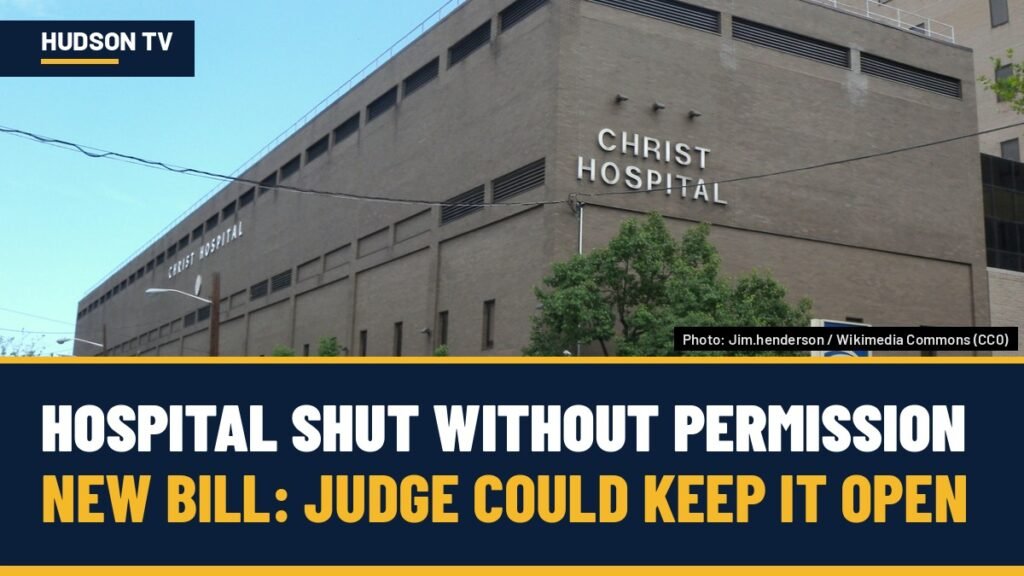
Heights University Hospital, formerly Christ Hospital, at 176 Palisade Ave. in Jersey City, in a 2011 photo. (Photo: Jim.henderson / Wikimedia Commons, CC0)
Jersey City’s Heights University Hospital shut its doors without the state’s permission. Under current law, the state could fine the owner and keep a financial watchdog inside, but it had no power to put someone in charge to keep the hospital running. A bill in Trenton would change that by letting a judge step in and appoint an outside manager to keep a hospital open.
The bill, sponsored by state Sen. Raj Mukherji (D-Hudson), passed its first committee in the state Senate on Monday, Oct. 5, with changes. It now goes to the Senate’s budget committee.
Why it matters: when Heights closed its emergency room in March, Jersey City Mayor James Solomon said the operator would “close a hospital serving 300,000 people as if those obligations never existed.”
What the words mean
- Certificate of need: the state’s OK required before a hospital can close or cut major services.
- Receiver: an outside manager appointed by a judge to run the hospital.
- Financial monitor: a watchdog the state places inside a struggling hospital to track its money and report problems. A monitor does not run the hospital.
- Temporary restraining order: a short-term court order that puts something on hold.
What happened at Heights
Heights University Hospital, the former Christ Hospital, is run by Hudson Regional Health, which took over after the CarePoint bankruptcy.
- October 2025: The operator asked the state for permission to close in stages. According to the state’s penalty notice, the hospital said it was losing more than $60 million a year.
- Nov. 14, 2025: The hospital closed everything except its emergency room, without state approval.
- Jan. 16, 2026: The state Department of Health fined the hospital $128,000. The notice says the penalty is $1,000 a day, from the Nov. 14 closure through Jan. 16, for each condition of its state approval that the hospital broke. (State penalty notice)
- Feb. 27, 2026: Acting Health Commissioner Raynard E. Washington said the operator “remains out of compliance with regulatory and statutory requirements” and that a financial monitor “continues to be onsite.” (State statement)
- March 14, 2026: The emergency room closed while the closure application was still pending. That day, a court turned down the city’s request for an emergency order to stop it, according to the mayor’s office. (City statement)
- April 2026: The operator tried to withdraw its closure application and call the shutdown a “suspension.” In an April 14 letter, the state said no, writing that “it is too late” to withdraw now that the hospital had already closed. (State letter) The next day, the state’s public hearing on the closure was called off because of a temporary restraining order filed in Hudson County Superior Court on the hospital’s behalf. (State advisory)
- June 2026: A judge dismissed the hospital operator’s lawsuit and lifted the restraining order, so the state’s review could go on.
Through all of this, the state could fine the hospital and keep a monitor on site. Under current law, it could not appoint a receiver to keep the hospital open.
What the bill would do
The bill is S4291. The version passed Monday includes changes that have not been posted yet, so the quotes below come from the original version Mukherji introduced on May 14, 2026. (Bill text)
- Who can go to court: If a hospital closes without the state’s OK, or is about to close without asking for it, the bill says “the Department, the Attorney General, or the municipality shall each have standing to bring a civil action in the Superior Court for an order directing the appointment of a receiver to maintain the operation of the hospital and all health care services being provided at such hospital.” In plain words, the state Health Department, the state attorney general, or the town could ask a judge to put in an outside manager.
- Fast hearing: “An action brought pursuant to this subsection shall be heard by the court within three days.”
- Who can be the manager: “The receiver shall be a person approved by the Department, except that no person who holds a financial interest in the licensee, or any family member of such person, shall be appointed as the receiver.” In other words, the owners and their relatives can’t get the job.
- The owner’s way out: An owner can defend itself in court by showing it has asked the state for permission to close and has brought back the services it cut.
The bill does not name any hospital. It is not clear yet whether or how it would affect Heights.
What’s next
The bill now goes to the Senate Budget and Appropriations Committee, then would need a vote of the full Senate. No matching Assembly bill is listed. To become law, it would also have to pass the Assembly and be signed by the governor. (Bill status)
What we don’t know yet
- What changes the committee made on Oct. 5. The amended text has not been posted.
- Whether the state has made a final decision on the Heights closure application. Hudson TV has not found one.
- When the budget committee will take up the bill.
Got a tip? Email tips@hudsontv.com or call/text 862-417-6695.
Hudson TV asks: If a hospital shuts its doors without state permission, should a judge be able to put in an outside manager to keep it running? Share your take in the comments.
0 comments
Sign in to comment