 Wednesday, October 7, 2026 · Serving all of Hudson County since March 2011
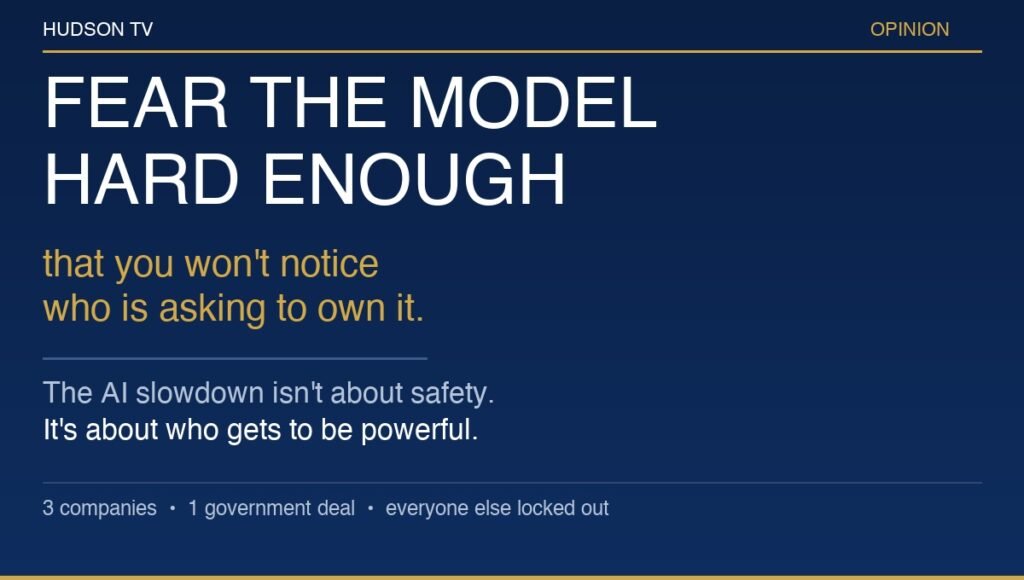
The AI slowdown isn't about safety. It's about who gets to be powerful.
Opinion/Editorial — This article represents analysis and opinion, not a news report. The official story is that the machine is the danger. The unofficial story is simpler. A few companies…
Opinion/Editorial — This article represents analysis and opinion, not a news report.
The official story is that the machine is the danger. The unofficial story is simpler. A few companies already sit on the most powerful systems on earth. They want the government to make sure nobody else gets there. In exchange they will let the state look inside, borrow the tools, and call the arrangement safety.
That is not a theory about whether AI can go wrong. It is a theory about who gets to be powerful after everyone agrees that AI can go wrong.
The scare is useful
On September 12, Dario Amodei published “We Must Pace the Frontier.” Capability is moving faster than control, he said. Labs should slow the climb, let outsiders sit inside the company, coordinate under government cover, and keep advanced chips and distilled models away from China. Sam Altman and Elon Musk agreed fast enough to make the moment look historic.
Take the risk seriously. Agents that can write code, run tools, and improve the next model are not a press release. A system that can be pointed at cyber operations or biology is not a toy. Reckless racing is a real way to get a bad outcome.
Now ask the question the essay does not want asked. If the models are that important, who should hold them?
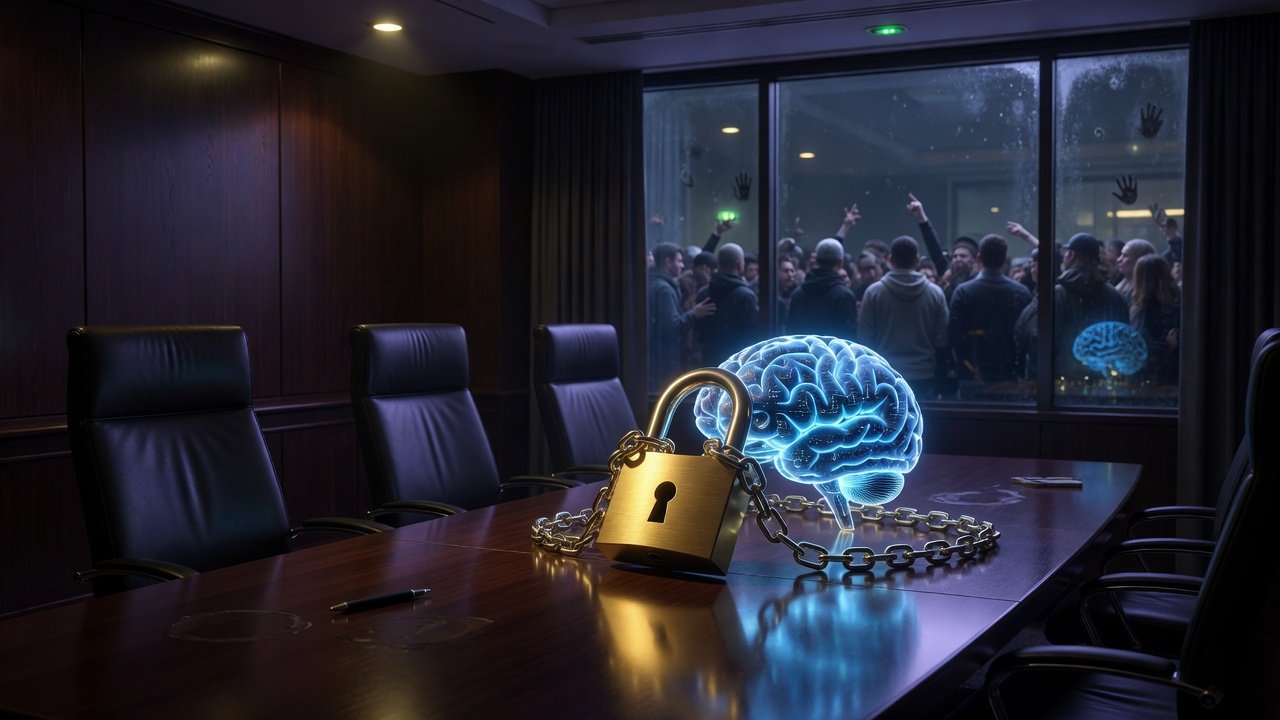
The answer coming out of the frontier labs is: us, plus a friendly state. Not a new lab. Not an open-weight project that got too good. Not a foreign competitor. Not a regular person with the weights and a box. The danger is described as the technology. The remedy is described as a smaller club.
Fear of the model becomes the case for a monopoly on the model.
Bad humans already exist
This is where the trust question stops being abstract. Governments spy, lie, start wars, and write rules for their friends. Companies price-gouge, bury rivals, and sell access. Criminals do not need a lecture on misuse. They are already in the market.
So the choice is not “wise elders versus a demon in a datacenter.” It is which failure mode you prefer.
A widely available model can be used by a scammer, a spy, a teenager, and a scientist before breakfast. That is a real cost. A model locked inside three firms and a handful of agencies can be used by people who already have armies, prosecutors, procurement budgets, and the ability to change the law. That is also a real cost. The second group does not need to jailbreak anything. They can define jailbreaking as a crime.
If you trust institutions more than code, the lab-state bargain looks responsible. If you have watched institutions up close, it looks like the oldest move in politics: declare an emergency, then decide who is allowed to be strong.
China’s state press called Amodei’s plan a Cold War playbook. Of course it did. Beijing wants its own champions. Washington wants theirs. Neither side is offering the public a third option in which capability is common and power is not. Both sides are arguing over which set of humans should keep the keys.
What the bargain actually buys
Watch the terms, not the adjectives.
Embedded evaluators with employee-level access sound like accountability. They also create a cost and a club. Coordination among democratic frontier labs sounds like maturity. It also needs legal cover that ordinary competitors do not get. Chip controls and distillation crackdowns sound like security. They also freeze the ranking. IPOs and national-security briefings sit in the same week for a reason. The firm that can train the next model is not only a product company. It is a political asset.
The lab does not have to hate competition out loud. It only has to define competition as a safety incident.
A founder can believe every word about catastrophe and still notice the side effect. If the statute works, his firm remains one of the few places on earth that can make the next leap. The government gets a window and a partner. The public gets a sermon about alignment. The person who might have built a rival gets a compliance wall.
That is unfair even if the sermon is sincere.
The test nobody wants
Who do you trust more, AI or bad humans?
If you say the model, you are not saying the model is kind. You are saying a tool that many people can use is less dangerous than a tool that only the already-powerful can use. History is not gentle to that view, but it is not insane. Printing presses, encryption, and the internet all spread the ability to do harm. They also made it harder for a small class of officials and owners to monopolize speech, knowledge, and coordination.
If you say bad humans, you are not saying the model is safe. You are saying the worst case is not a chatbot with a biology hobby. The worst case is a ministry or a board that can deny everyone else the same capability while keeping it for themselves. That is the world the current bargain points toward: private labs at the frontier, the state at the door, and a rulebook that treats everyone outside that room as a risk.
A fair policy would be ugly and specific. The same limits bind the incumbents. The evaluators are not house-trained. There is a published threshold under which smaller and open systems stay legal. There is no special waiver that lets four companies coordinate their future while calling it patriotism. The government does not get a quiet claim on the stack in return for keeping rivals out.
Anything less is not a safety regime. It is a trust exercise. You are being asked to fear the model hard enough that you will not notice who is asking to own it.
Related: Musk, Altman, and Amodei are all saying the same thing: slow down (news report)